Friday, August 14, 2020

Where we are? Capitalism works, for some


If you are a socialist there are three questions you need to ask:

1.  Where are we?

2.  Where do we want to be?

3.  How do we get from 1 to 2?

All we need to do is answer those 3 questions and we’ll be on the way to socialism. So here goes with question 1.


The majority of people in the World are living in, broadly speaking, capitalist societies. There are arguments about whether that is a description of Russia, China and Cuba but let’s leave them to one side.


Capitalism works well for a minority and not so well for many millions of people who have, literally been left behind.


According to the Credit Suisse Global Wealth Report, the world’s richest 1 percent, those with more than $1 million, own 44 percent of the world’s wealth. Their data also shows that adults with less than $10,000 in wealth make up 56.6 percent of the world’s population but hold less than 2 percent of global wealth.


In 2018, the three men at the top of the Forbes 400 list — Amazon founder Jeff Bezos, Microsoft founder Bill Gates, and investor Warren Buffett — held combined fortunes worth more than the total wealth of the poorest half of Americans. (Inequality.org)


In short, the rich continue to get richer whilst the poorest remain in destitution. We are taught to aspire to be rich rather than to help the poor. By definition rich people are not in debt. By definition poor people are. That debt is often, indirectly, owned by the rich. So, in addition to living in poverty and not having enough to eat, the world’s poor are forced to give what little income they do have to those with huge houses, yachts, cars and extremely comfortable lifestyles. If that is not a definition of immorality, I don’t know what is!


In the U.K., according to a House of Commons briefing paper, the total amount of household debt rose from £747 billion in 2001 to £1,785 billion in 2018. The ratio of debt to disposable income increased over the same period from 98.9% to 133%. In simple terms household debt is now running at one-third more than people can afford to pay off, even if all they did was pay down their debts. According to research by the Money Charity the average household in the U.K. was £60,636 in debt in January 2020. This amounts to more than £31k per adult which is 112% of average earnings. 

Just to be clear, debt is only a problem if it is called in. Most debts are repaid over a time period so that people still have enough to live. For many people though debt is out of control and they are robbing Peter to pay Paul. In 2019 there were 4,580 house repossessions in the U.K., an all time low but housing experts predict these numbers could rise again following Brexit and the pandemic. In December 2019, The Big Issue reported:


An estimated 320,000 people are homeless in the UK, according to the latest research by Shelter. This equates to one in every 201 Brits and was an increase of four per cent on the previous year’s number.


The economic recession of 2008-9 was caused by banks lending ever increasing amounts of money to people who had no realistic chance of paying it back. Those debts were then bundled with other debts and sold on, until eventually the bubble burst. Thousands of people worldwide lost their jobs, their homes and their dignity, and the banks greed led to the policies of austerity that have been responsible for so much misery. I don’t do predictions but it started with unsustainable debt, so what do we think might happen shortly?.


By any measure being in debt which you cannot pay is miserable. But it pales into insignificance compared to being forced to live in a war zone. Since 2001 over 800,000 people have been killed in armed conflicts. Currently around one-third of the land mass of this planet have ongoing armed conflicts. If you need proof that our system is dysfunctional it is that 75 years after Hiroshima and Nagasaki heralded the end of World War 2 we still regard war as a legitimate means of solving conflicts. In 2019 the United States alone spent around $718.69 billion on its military. 


Wars may be bad for the people caught up in them, but they are good for business. Lockheed Martin Corporation (USA) sold  $44.9 billion of arms in a single year, Boeing  (US) around $26.9 billion, Raytheon (US) $23.8 billion, whilst the UK’s biggest manufacturer BAE Systems (UK) sold $22.9 billion in 2017. 


Between them the top 15 arms manufacturers sold $231.6 billion in 2017 amounting to over 50% of their sales. Arms manufacturing might be entirely immoral but it is also highly lucrative. Just 4 of the top arms manufacturers employ close to half a million people. And, there sole business is the destruction of human life. The Watson Institute reports:


“The wars in Iraq, Afghanistan, Yemen, Syria, and Pakistan have taken a tremendous human toll on those countries. As of November 2019, 335,000 civilians in these countries have died violent deaths as a result of the wars. Civilian deaths have also resulted from the US military operations in Somalia and other countries in the U.S. war on terrorism.”


War, and its toll, is built into the fabric of capitalism. People become socialists for many different reasons but any socialist who supports an imperialistic war is no socialist at all. As I pointed out last week Labour MP’s voted to bomb women and children in Syria mainly so that they could embarrass a leader they didn’t support. War is not about heroic feats on the battleground but the devastation that is left behind including the civilians left displaced.


Capitalism’s greed has created a situation where 79.5 million people are displaced (according to UNHCR). This amounts to 1% of the World’s population. Of these people 40% are children. In any civilised social system we would be providing all children with safe environments to enjoy their childhood. These displaced people’s have few rights and what few they do have are under constant threat.


UNICEF reports that some 385 million children live in extreme poverty. In the U.K. it is estimated by the Child Poverty Action Group that around 4.2 million children live in poverty. Worldwide, around 3.1 million children die from undernutrition each year. UNICEF estimate that more than half of global child deaths are related to hunger and under nutrition which make children more vulnerable to illness and exacerbate disease. According to the US Department of Agriculture, more than 11 million children in the United States live in, what they term, "food insecure" homes which means that those households don't have enough food for every family member to lead a healthy life.


It’s easy to blame parents for childhood poverty, as if that somehow lets the system off the hook. But, if you are born to parents who become impoverished through bad luck, ill health or misfortune, that is hardly their blame. The fact is that we have privatised childhood so that communities rather than caring for children can simply point the finger at those who fail to do so. 


The reality is that in our society most people exist by working for a living. Being out of work or unable to work is not like taking a holiday unless your idea of a holiday is not having enough money to eat and pay for luxuries like gas and electric. Yet, unemployment is an endemic feature of the social system. In the U.K. alone there are currently 1.4 million people who are unemployed. Worldwide it is estimated that in the so-called developed economies the unemployment rate is over 8% of the adult population.  This amounts to over 190 million adults with no paid employment and many of those in countries where there are no adequate benefits.


Unemployment can seem like a private tragedy rather than a systemic problem. Capitalism has always required a pool of what Karl Marx called a ‘reserve army of labour’ in order to drive down wages and conditions. But, as unemployment grows so does child poverty, crime and prostitution. Whilst that reserve army might benefit capital it does not benefit society as a whole.


Workers first line of defence against capital is trade union membership. In the U.K. there has been a decline in union membership as the large industrial sectors – coal, steel, ship building etc – have been destroyed, and production moved elsewhere where labour is cheaper and unorganised. According to the Department of Business, Energy and Industrial Strategy trade union membership in the U.K. now stands at 6.35 million (as of June 2018). However, whilst 52% of public sector employees are in unions, the comparative figure in the private sector is 13%. This represents a real challenge for the left as we are constantly drawn into defending the pay and conditions of public sector trade unions. This has a real danger of promoting a divide amongst workers as private sector workers, already on far worse conditions, become resentful of what to them may appear to be the more pampered conditions of those in the public sector. It is worth making the point that what were termed “essential” workers during this pandemic were probably fairly evenly split between public and private sector.


As of December 2019 the ONS estimated that there were 5.44 million people employed in the public sector, of which 1.73 million were employed by the NHS alone. The private sector is 5 times the size of the public sector, accounting for 27.55 million workers. In 2016, the average public sector worker earned 13% more than their private sector counterpart. Despite this, recent research has suggested that some public sector workers are thousands of pounds worse off compared with 2010, before the introduction of limits on public sector pay. Private sector employees are more likely to be in non-unionised, casual work with no holidays or sick pay.


Work is dominated by the demands of a handful of multi-national companies. The largest of these used to be General Motors which has a net worth of $228 billion, and employs 164,000 people in 396 facilities on 6 different continents. But in a sign of the times General Motors is no longer in the top ten companies in the world. All of those are technology or financial companies including Microsoft (151,000 employees), Apple (137,000 employees), Amazon (840,000 employees), Alphabet/Google (123,000 employees), Facebook (52,000 employees) and Visa (19,500 employees).  These multi-nationals are often not subjected to legal restrictions, often avoid paying tax and act, in effect, as mini-states. Governments court these companies with sweetheart deals to encourage what has come to be called ‘inward investment’. The emphasis on inward investment distorts local labour markets and creates an economic dependency on companies who have no loyalty to any particular government.


Capitalism works on the basis of investing capital for a return. Capital cares little, if anything, about the welfare of ordinary people. What drives investment is the rate of return. Michael Roberts, a Marxist economist has analysed historical data to show that Marx was right, the rate of profit does have a tendency to decline. The basis of these calculations is quite technical but his summary is interesting:


“…whatever measure is used, the rate of profit in 2015 is lower than in 2012; lower than in 2006 (the peak of the last cycle); and lower than in 1997 when most measures peaked.  So there is currently a downward phase in the rate of profit. .”


This is significant because if Marx is right, and historically his analysis has been shown to be remarkably prescient, capitalism exists in a cycle of peaks and troughs with the gap between them getting shorter over time. The way in which larger companies stay competitive is by eating up the competition. As Michael Roberts says in another blog post, whilst the American economy is contracting the ‘fearsome four’ (Microsoft, Amazon, Apple and Alphabet Google) are continuing to be competitive. They have achieved this domination by effectively squeezing out competitors, often by acquiring companies simply to destroy them:


“But this is not new in the history of capitalism.  Successful companies in new expanding fields of capitalist accumulation have grown from small to large and eventually to ‘monopoly’ positions: railways, oil, motor vehicles, finance and telecoms.”


So, where are we? As socialists we are about where we have always been. Caught between our internationalist impulses and seeing the World as ending at our national borders. A seeming minority that probably has far more support than we realise. At the dawn of a new era, but not entirely sure when the current one will end.


Capitalism is in crisis, but this is nothing new. Capitalism is nothing if not flexible. It is a system driven purely by acquisition without moral responsibility. What is rational for a single capital may destroy lives, may even destroy the planet, but will provide the short term adrenaline rush of success measured in the accumulation of wealth.


Those who think that capitalism can be beaten by rational, or moral, argument entirely misunderstand, that whilst capitalists (and their many acolytes) may be rational, and moral, the system they exist within is neither of those things. 


So, we face a World riven apart by ethnic tensions, nationalist and imperialistic war, environmental degradation and now the threat of untreatable disease. A world where for a few people to live in opulence previously unimaginable, and a supporting layer to live relatively comfortably, millions, literally hundreds of millions, have lives of destitution, degradation and demoralisation. For the richest citizens of this planet to “enjoy” their bounty the poorest must be driven into ever more extreme poverty.


But, because capitalism is constantly lurching from one crisis to the next, there are possibilities for socialists and, more importantly, for socialism. As more and more people are pushed into in-work poverty, as debt rises and working conditions deteriorate in order to maintain unobtainable rates of profit, then workers have a choice. Accept the lowering of their own living standards and see their children’s opportunities diminished, or organise and fight back. First in trade unions but also in progressive political parties. 


Whether capital or worker wins is largely determined by material factors which are difficult to predict. General strikes in France and Bolivia show that workers can only be pushed so far before they push back. The concessions granted are a sign of the relative strength of the ruling class. An audit of where we are shows that for many millions of people capitalism isn’t working, for many millions more it is working only to keep them just above the poverty level. The question is: where do we want to be. And, that is the question for next week’s blog.


While you’re here: if you like what you’ve just read why not use the subscribe button on the top right to get notified of future posts.

Support Chris Williamson and other Labour members against EHRC smears. Donate here

Saturday, August 8, 2020

Marx out of 10: why every socialist should read Marx


When I first got involved in politics I did not have a worked out political philosophy. My guess is that would be true for regular readers of this blog (and her Mum). I knew what I disliked – mainly the Tories – but I had no idea how society worked, or what forces were ranged against my ambition to change things. I did not understand that I was on the left, or even that I was working class. I’m not sure I even knew that we lived in a capitalist society.

It was only when I joined the Labour Party that I found an outlet for my anger and frustration. Whilst the party was really poor at answering the more important questions I wanted answered, it was in the party that I met people  who would introduce me to ideas that would not only help me to explain what was wrong with society, but also understand what was necessary for things to change. It was immediately obvious to me that simply wanting change was not enough, nor that electing a Labour government would of itself bring about the type of society that I quickly came to dream about.

That type of society I came to identify as socialist which, to be honest, was a bit of a relief because I did not want anything to do with “communism” which I identified with (cue dramatic, eerie music) – Russia. It was a friend in the Labour Party who first identified us (that is, me and him) as part of the left. I was slightly horrified to discover that this was what he thought of me as I had been a loyal Daily Mirror reader and in the 80’s that meant an understanding that Denis Healey was sensible and electable and Tony Benn was mad and dangerous.

But, it was another friend, Derek Newlands, now sadly departed who told me very clearly that there were two sides: workers and bosses and you could only be on one side. His analysis was that when workers stuck together they were unbeatable. And, one day, he lent me a series of books, amongst them a small pamphlet called The Communist Manifesto by Karl Marx and Friedrich Engels. It was written in 1848, but from its opening paragraph “A spectre is haunting Europe — the spectre of communism.” To its closing rallying call “Let the ruling classes tremble at a Communistic revolution. The proletarians have nothing to lose but their chains. They have a world to win.” I was captivated. Here, contained in this small booklet was the answer to those questions that I had been asking for years. It is no exaggeration to say that this small pamphlet changed the way I looked at the World.

In the 1980’s Marxism was undoubtedly the theory to engage with. Either people were promoting Marxism or trying to disprove it. Some of the most passionate anti-Marxists were university educated, white collar workers and their dismissal of Marxism was often on the grounds that there was no longer a working class which could lose its chains. In their view social mobility had all but rendered the need for revolution obsolete. Besides if the system was going to change, it was not going to be done by a bunch of dirty, uneducated factory workers. It would surely be achieved by well meaning, well educated, politically literate individuals who would employ reason to gain power and then rule in a benign manner which would raise up the lower classes. But most of their ire was directed at the left, particularly the Marxist left, who they assumed had unrealistic aspirations for violent revolution. Naturally, I sided with the revolutionaries who wanted to change society not just bring in a few reforms.

The real point here though is that Marxism provided an anchor for the left. No politician or political theorist could ignore it. Of course, by the 1980’s there were a huge number of ‘Marxism’s’ to choose from. But, all of them were variants of Marx’s work. The big divide, of course, was where you stood in relation to Russia. In some ways it still is, though in those days there were still people who harboured the illusion that Russia was a socialist paradise (most of them were not Russian you might note).

Today, very few people describe themselves as Marxists. Certainly, in the Labour Party nobody in the party hierarchy would dare call them self a Marxist, and not only because they actually don’t believe a better World is possible, though that does appear to be the case. Although Jeremy Corbyn was labelled a Marxist by both the Tories and media it was Robert Halfron MP who pointed out, in Conservativehome no less, that it was not a useful description. Whilst Corbyn is the closest thing to a Marxist leader of the Labour Party we have seen, even he would not describe himself in such terms. Fidel Castro he is not. It is as if the left are terrified of being associated with Marx, and I have to say that this seems to me a massive error for it is probably only Marx who offers a framework for understanding capitalism, and therefore a means to replace it.

Marx was undoubtedly the pre-eminent socialist theoretician of his time. It is often overlooked in his demonisation by a bourgeoisie that still tremble at the thought that he could prove to be right, that he was a fine scholar who just happened to believe that workers held it in their own hands to change their conditions, whether they realised it or not. That emancipatory thread running through Marx is why left activists, often adrift in a sea of rhetoric, could learn by spending some time acquainting themselves with his writings.

I’m not going to use valuable space in this blog with quotes from Marx, he is definitely worth the time to read if you never have; and worth reacquainting yourself with if you have but not recently. There are some good books about Marx, and some awful one’s, on both sides of the divide. My advice would be to ignore them, read his own words, and make up your own mind.

People, wrongly, assume that Marx’s writing is dense and impenetrable, but whilst there are some difficult concepts in Marx, the basis is actually quite simple. “The history of all hitherto existing society is the history of class struggles.” Whilst Marx was not the first to see the role of classes in history he was the first to regard history as a struggle over resources, including political power, rather than the deeds of great men (these days, largely thanks to a Marxist-Feminist Sheila Rowbotham, great women get a look in too). History is not, as it turns out, about which monarch was on the throne and which great battles they won, in Marx’s view of history there was not just a place for ordinary men and women they actually had a starring role. 

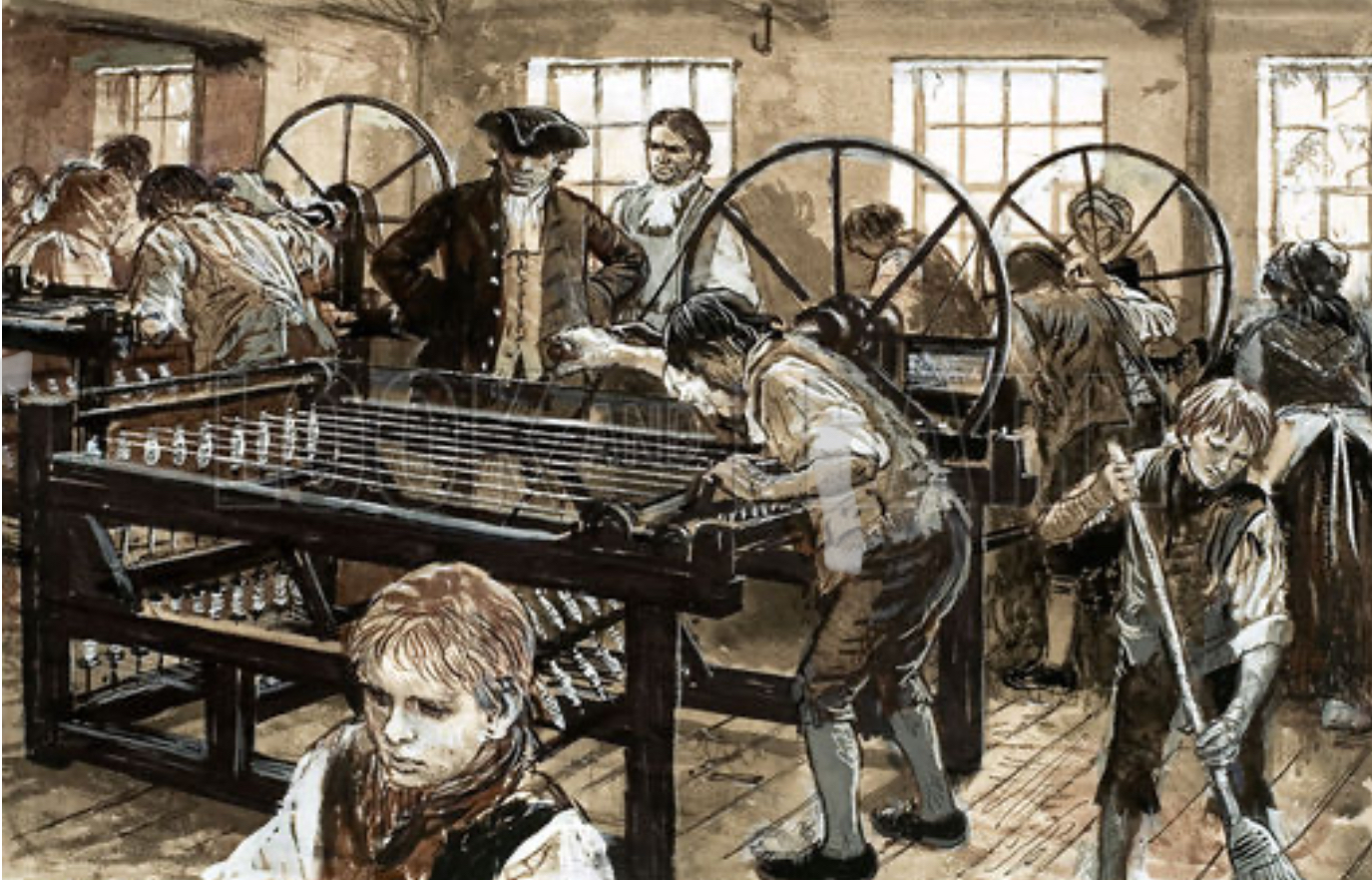
Now, I read this for the first time through the prism of a basic disdain for bosses. So, I was shocked that far from expressing hatred for the ruling class Marx and Engels showered them with praise. They did not have a moralistic hatred of bosses, though they were pretty appalled at some of their practices. But, they regarded capitalism as a progression in human history. Capitalism swept away that which had preceded it – feudalism – and ushered in a new social system that freed the peasants from the yoke of serfdom.

Capitalism was a stage of human development
The point was that capitalism was a necessary step in human development but just as other social systems before it had been replaced, so capitalism would give way to a better form of society where human beings would be free to express themselves as equals. That system they referred to interchangeably as communism or socialism. You can imagine how thrilling it was for the young me to discover that the social system that I could plainly see was responsible for so much human misery was neither natural nor perpetual. Discovering I was a communist came as a bit of a shock too!

What they called the ‘materialist conception of history’, what some call ‘dialectical materialism’, was an analysis of class struggle which gave to competing classes important roles. In short, each radical change was accomplished by the existing ruling class being replaced by a new ruling class. In most of what they called epochs the soon-to-be ruling class could only achieve their aims by building alliances with other classes. But, as soon as they were in power, the ruling class created the illusion that their rule was both inevitable and beyond challenge. Our current ruling class have made a fine art out of convincing other classes that they are the universal class that we should all aspire to. They have literally turned greed into a fine art.

The class system in modern capitalism is unique in history in that movement between classes is not only possible, but allegedly the entire function of the social system. Upward mobility is not just a sociological concept but an aspiration for all of us regardless of our class of origin, with the possible exception of the monarchy who linger like a stain on a rug that everybody knows is there but nobody mentions. There is undoubtedly some movement between classes which allows this great con trick to be widely believed, but the truth is that the class into which you are born is still the best indicator of the class in which you will end up.

Possibly one of the things I found most enlightening in Marxism was its insistence that there were these two great classes: bourgeoisie and proletariat. At this stage in my life I had not attended a single sociology class (I confess that since then not only have I studied sociology, but I’ve also taught it. I am suitably ashamed of this aberration in my character). It seemed that you had to be in one of these camps, but on reading more about what Marx called the proletariat I found that they were not just everybody who worked. Indeed, it is a “mistake” made by some Marxists to say that the proletariat is the working class. The proletariat, as described by Marx, are certainly working class, but simply working for a living does not make you part of the proletariat.

It took me a long time to understand why it was the proletariat rather than the working class per se that stood in opposition to the bourgeoisie and why this opposition was so important for Marx. In Capital, which has a misplaced reputation as turgid, Marx describes the essential component of capitalism as the commodity. Modern day sociologists describe the consumer society as if they have made an important revelation. But, Marx had done all the legwork for them by 1863.

You know, even if you are not a Marxist, that in a capitalist economy everything revolves around commodities, around buying cheap and selling dear. And, if you stop to reflect for even a second you know that commodities don’t enter the World already formed. Something gives them value. That something is first that they have a use, and second that somebody has taken some raw materials and changed them into something useful. It is the act of mixing raw materials with labour power that creates the commodity and therefore the value.

I’ve worked in factories. I’ve mixed my labour power with raw materials. I’ve received my wage, and I’ve seen the owners of those factories get richer and fatter. One thing I have not felt is any sense that those commodities that I have helped produce are mine. Mainly because they are not. They belong to my employer. When I view the product of my labour I may feel pride in a job well done but I don’t feel ownership of my labour. The value I have put into that commodity stares back at me as an alien being. And, if it were not that commodity, it could be another in another factory. Marx describes this process as alienation, which as it turns out, has nothing whatsoever to do with disenchanted youth on street corners on run-down estates.

Spot the proletarian
As I got more involved with the labour movement, both through trade unions and the Labour Party, I came to realise that I was actually meeting very few proletarians. Very few people who had worked in dirty factories producing commodities for somebody else to profit from. Most of the people I met, particularly in the Labour Party, were white collar workers, and whilst they might be empathetic to the working class, they were not proletarians. For some, supporting the proletariat meant supporting their picket lines and providing the intellectual foundation for a movement for change. For others, it means signing the occasional petition, and arguing for reforms which make their lives more comfortable. It certainly does not include the notion that it is only the proletariat that stand in direct opposition to the bourgeoisie.

Such language – proletariat, bourgeoisie, even revolution – seems strangely antiquated where the best we can hope for is a parliamentary majority for a party many of whom will gladly follow Ian Austin and John Mann on to the Tory benches in the House of Lords, if things don’t work out for them. The support for a party that repeatedly sells us down the river is a sure sign that we have not only lost our bearings but that we no longer have an anchor at all. We drift from campaign to campaign, from election to election with no over-arching vision. With no detailed theories of why things are as they are or any theory of radical change. The only vision is a few temporary reforms that make the lives of the worse off slightly more bearable. And, currently the “workers party” does not even seem convinced that they should argue for reform. A look at the PLP will tell you why. You are more likely to find a barrister than a barista on Labour’s benches.

To be clear here I am not arguing that we should all leave the Labour Party. Nor, that we should either set up or join a so-called revolutionary party. Revolutions don’t happen because of revolutionary parties but more often despite them. But, we are a long way from a revolution. Or maybe we’re not. Revolutions can clearly be seen in hindsight but are usually not visible to most people until they occur. And, that includes those who think of themselves as revolutionaries.

If there is any vision at all on the left currently it is a far cry from a vision in which the proletariat would take control and institute a society which would inscribe on its banner “From each according to their ability, to each according to their need”. Anybody who calls themselves a socialist should engage with Marxism. They are entitled to disagree with it. From what I know of Marx he certainly would have. They are also entitled to disagree with my interpretation of it. But without some guiding theory what are we doing? It is plainly obvious that it is not enough to simply create a moral argument against capitalism. As Marx rightly said “The philosophers only interpret the World, the point is to change it.” We need a strong understanding of the underlying mechanisms of capitalism in order to confront it.

Marx did not give a starring role in the revolutionary struggle to the proletariat because of any romantic notions of working class solidarity. Nor because the proletariat would form reading groups, read the Manifesto and Capital and put those ideas into action. The proletariat’s role in overthrowing capitalism is not the result of their superior revolutionary consciousness but simply their material place in regard to the bourgeoisie. So-called “middle class” people who are socialists might not like it, but if they want socialism they have to play the supporting role to the proletariat in their struggles which if Marx was right will be the struggle that ends class rule for good.

What to read if you want to know more about Marx:
The Manifesto Of The Communist Party
Wages, Labour and Capital
The German Ideology
Capital Volume One (but only if you have a spare weekend)
* All available here *

While you’re here: if you like what you’ve just read why not use the subscribe button on the top right to get notified of future posts.
Support Chris Williamson and other Labour members against EHRC smears. Donate here
Nominate Jeremy Corbyn as MP of the year here


Saturday, August 1, 2020

Why I still stand with Jeremy Corbyn


I still stand with Jeremy Corbyn because I believe that the U.K. can be a more equal society, that there is nothing inevitable or natural about inequality, child poverty, homelessness or racism. I believe, like Jeremy, that the majority of wars could be avoided by diplomacy and that all peoples have the right to a say in their own lives. I believe, with Jeremy, that a better future is possible and that a more compassionate, empathetic, and less febrile politics is possible if we concentrate on what is in the interests of the many not just on what serves the status quo. 


The first time Jeremy Corbyn crossed my radar was during the miners’ strike in 1985 where, if my memory serves, he shared a platform with Paul Foot and Peter Heathfield. At the time he was a relatively unknown backbench MP. The next time was in 2001 when he was a fierce and principled campaigner against the illegal war in Iraq. And then, I suspect like many others, I forgot about him. Until 2015.


I was not a member of the Labour Party in 2015, having left in 1985 following the miners strike and Kinnock’s disgraceful attack on Liverpool City Council which prompted veteran left-winger Eric Heffer to walk out of conference. I had only joined in 1983 spurred on by my utter hatred of Mrs Thatcher. 


Although I had many friends in the party leaving was not a problem as I had reached a conclusion that the Labour Party was the least political organisation I was involved in. I continued to be politically active chairing the miners support group, leading a tent city campaign against youth homelessness, campaigning on pension rights, against the poll tax and joining picket lines as and when I could. But, whilst always voting Labour I kept them at arms length and felt none the worse for it.


2015. The right-wing of Labour were determined to keep Jeremy Corbyn off the leadership ballot. Jeremy managed to scrape together the required number of MP nominees, many who nominated him safe in the knowledge that this would be a humiliating defeat for the left. Even before the ballot was held Blairite John McTernan said MPs who "lent" their nominations to Jeremy to "broaden the debate" were "morons". Margaret Becket admitted: "I am one of them." The really moronic act was to approve changes brought in by the previous leader Ed Miliband, which allowed people to become a supporter for £3 and get a vote for the party’s leader. I didn’t but many did.


I can remember the day the result was announced. We were travelling back from Liverpool where my son had been for a university open day. I confidently predicted that Corbyn would come fourth. I had not expected him to win, I certainly hadn’t expected him to win so convincingly. It is worth reminding ourselves of the result if only so we can gloat over the humiliation of Liz Kendall.


Corbyn won 251,417 votes (59.3%). His nearest rival was Andy Burnham who received 80,462 (19%). Ironically, given that she was later christened the real leader by The Guardian and various Blairites Yvette Cooper received 71,928 votes (17%). Whilst Liz Kendall managed a desultory 18,857 votes (4.5%). It was interesting, however, that Jeremy received a majority neither from MPs, the majority of whom were horrified by his victory or existing party members, of whom 49.6% voted for Jeremy. We probably never noticed at the time but there was a narrow majority in the constituencies who wanted a return to Blairism. What we also did not realise at the time was that whilst the left were celebrating, the right started organising to take the party back.


In my car travelling back to Wales I was shell shocked by the result but still not convinced I wanted to rejoin a party I had left vowing never to return. I was wrong. Again. Suddenly, the Labour Party was the only place to be if you were a socialist in the U.K. I was just a little slow reaching that conclusion. Not so others.


In his excellent book about Jeremy’s campaign The Candidate Alex Nunn describes the feeling as the result was announced:

“In front rooms around the country there was unbridled joy as Corbyn supporters watched the news break on live TV. Michelle (Chelley) Ryan, the party member who had initiated the petition demanding an anti-austerity candidate all the way back in May 2015, was waiting nervously with her family in Worthing: ‘We were all holding hands, all sat on the sofa. I couldn’t look at the tele. They announced the result and we were just screaming. Next door – I hope they’re into politics because we were literally screaming and crying. It was magical. I’m getting tearful talking about it, reliving it.’” (Alex Nunn, The Candidate, 2016, p.303)


Do you suppose anybody was crying tears of joy the day SirKeir was elected? No, me neither, though I did feel like crying.


Even before Jeremy had completed his victory speech the right were planning to overturn his triumph. Jamie Reed, an otherwise forgettable MP declared that he would not be part of a Shadow Cabinet. Others also refused posts they had never been offered. They included:Tristram Hunt, Chris Leslie, Rachel Reeves, Emma Reynolds and John Woodcock. At Labour HQ in what was to signify a coordinated attempt to undermine Jeremy’s leadership staff wore black in mourning at the loss of their party. We now know thanks to the leaked report that this was the start of a coordinated campaign by Labour staff to prevent the election of a Labour Government.


As Craig Murray concludes after having read the report:

“Labour HQ was staffed by right wingers so vehemently anti-Corbyn that they actively wanted the Conservatives to win elections. I think it is important to understand just how right wing they really are. Senior members of staff were messaging each other opposing any increase in corporation tax and opposing re-nationalisation of the railways as “Trot” policies.”


But it wasn’t just embittered MPs or recalcitrant Labour staffers that began a blitzkreig of negativity against Jeremy. The so-called left-leaning Guardian wasted no time in undermining him. As the always excellent Media Lens point out in a recent briefing:

“In an article titled, ‘Leather jackets, flat caps and tracksuits: how to dress if you’re a leftwing politician’, Hadley Freeman wrote in the Guardian in 2016:

‘Now, personally, some of us think that Corbyn could consider updating his ideas as much as his wardrobe… He must spend veritable hours cultivating that look, unless there’s a store on Holloway Road that I’ve missed called 1970s Polytechnic Lecturer 4 U. Honestly, where can you even buy tracksuits like the ones he sports?’ 

This wasn’t racism, but it was classism. Much of the focus on Corbyn being insufficiently ‘prime ministerial’ was establishment prejudice targeting a working class threat. Corbyn didn’t dress like the elite he was challenging – he wore ‘embarrassing’ sandals rather than ‘statesmanlike’ black leather shoes; an ’embarrassing’ jacket rather than the traditional long, black ‘presidential’ overcoat – just as (Russell) Brand didn’t know the ‘correct’ way to say ‘hegemony’. Corbyn was second-rate, Polytechnic material; not first-class, Oxford material, like Freeman.”


I rejoined the party in time for the Owen Smith leadership attempt. This followed the absolute refusal of the majority of the PLP to allow a little thing like democracy get in the way of their anti-left prejudice. By 26thJune 2016, just 2 months into his leadership The Guardian was reporting:

“More than half of the Labour shadow cabinet is expected to stand down on Sunday in a major coup against Jeremy Corbyn, triggered by the result of the EU referendum and the leader’s decision to sack Hilary Benn.”

I’ve been active politically since the 1980’s and was under no illusions how perfidious Labour’s right were, but even I was shocked by this. Essentially, the PLP having been roundly defeated in a democratic election declared themselves all-knowing and all-powerful. ‘Forget democracy,’ they said ‘we know better than 250,000 members. Give us exactly what we want or we’ll paralyse the party.’ The sheer arrogance of these people was astounding, but it was always based on a series of lies which they concocted. 

It was the lie that Jeremy was responsible for the Euro referendum result, that Jeremy could not lead, that Jeremy was unelectable, and most pernicious of all that Jeremy, a life long anti-racist campaigner who had been arrested outside Africa House demonstrating against apartheid was an anti-Semite. In truth, what they hated about Jeremy, and still do was his honesty, his integrity, his compassion, his ability to galvanise thousands of people, especially young people, who finally had a leader and policies they could actually believe in. The very qualities that attracted an additional 300,000 members were the same qualities that the professional politicians of the PLP neither respected nor understood. It was those qualities that made old lefties like me see Jeremy as the real deal and those qualities that ensured that I, and thousands like me, stood with Jeremy and refused to believe the lies that were being spread by his enemies.

In 2016 Hilary Benn’s treachery was, supposedly, a result of the EU referendum for which the “Bitterites” (as his detractors in the Labour establishment were labelled), completely without foundation, blamed Jeremy. This lie was repeated for four years. In order to show his ‘principled’ and serious credentials for leadership, Benn voted against the party whip to support British bombing of war-torn Syria. Cheered by the Conservatives, Benn took pleasure in justifying the murder of unarmed women and children with one aim: to embarrass his own leader. No leader, even one as conciliatory as Jeremy Corbyn could have done anything other than sack him from the Shadow Cabinet. This sacking prompted the pre-arranged mass resignation from the Shadow Cabinet, the eventual vote of no confidence from a PLP who were always clear that the political leadership of the party was a personal matter, and then the ill-fated leadership challenge from Owen Smith.


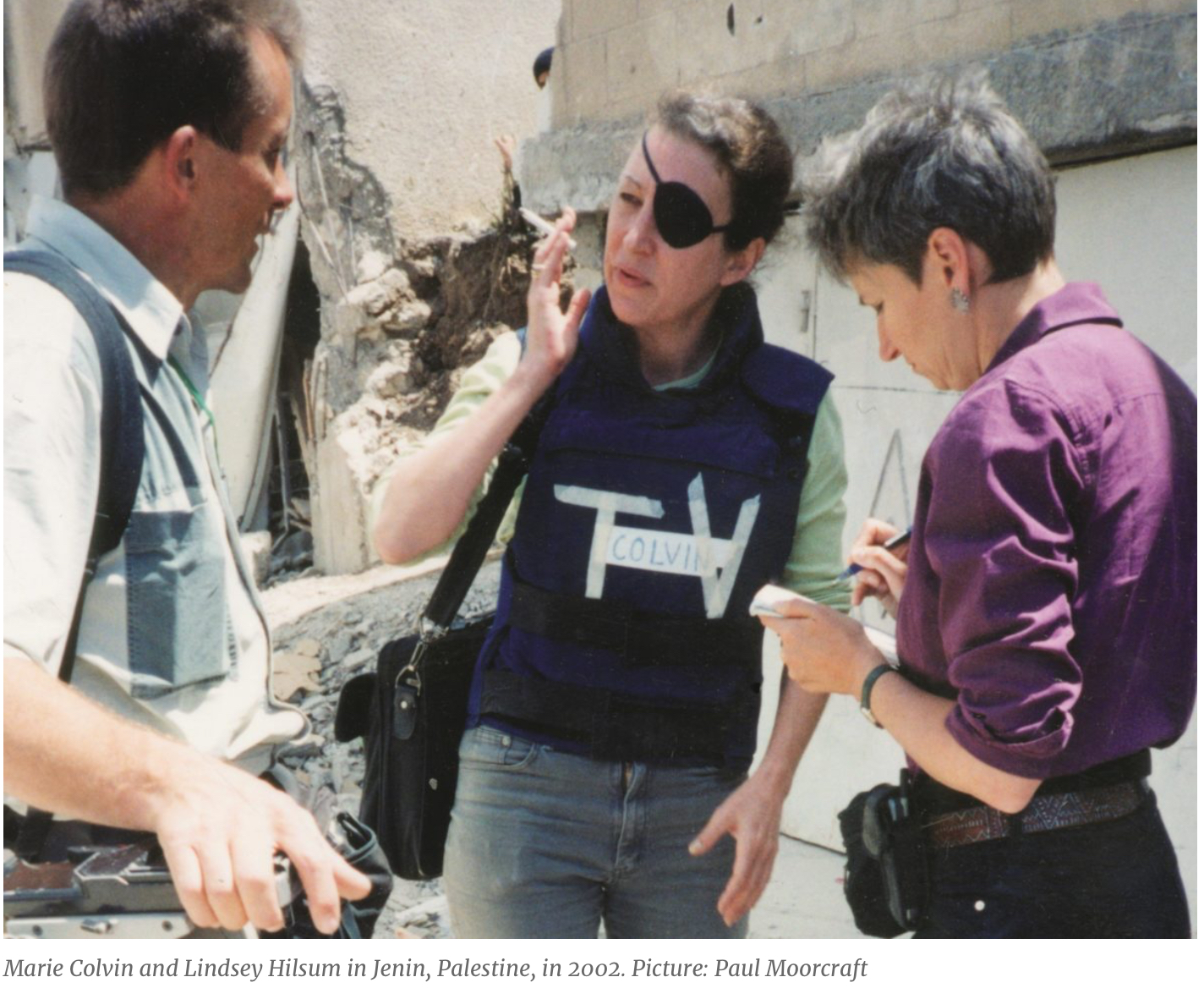
But, let’s not forget what Benn and his band of seemingly pre-pubescent anti-democrats were voting for. These are the words of Times correspondent Marie Colvin:


“They call it the widows’ basement. Crammed amid makeshift beds and scattered belongings are frightened women and children trapped in the horror of Homs, the Syrian city shaken by two weeks of relentless bombardment.

Among the 300 huddling in this wood factory cellar in the besieged district of Baba Amr is 20-year-old Noor, who lost her husband and her home to the shells and rockets.

“Our house was hit by a rocket so 17 of us were staying in one room,” she recalls as Mimi, her three-year-old daughter, and Mohamed, her five-year-old son, cling to her abaya.”

This was written in 2012, four years before Benn’s blood-soaked rebellion and believe me things had got no better by then, or since despite British bombing. It is one thing to oppose a leader of a party on factional grounds quite another to use women and children as collateral damage. It is worth reminding ourselves who were the architects of this “embarrassment”. They include 17 current Shadow Cabinet members (including Alison McGovern, Stephen Doughty, Peter Kyle, Lucy Powell and Liz Kendall), 8 defectors,  11 who have retired from parliament, 12 who lost their seats in 2019 and a handful still on the back benches who were opposed to Jeremy throughout his leadership including Margaret Hodge, Angela Eagle, Maria Eagle, Chris Bryant, Dan Jarvis, John Spellar and Yvette Cooper. Each one should hang their heads in shame, and anybody calling themselves a socialist who steps foot on a single doorstep to support them should join them in that shame. 

Lest we forget what exactly they were supporting. Craig Jones, a lecturer in political geography at the University of Newcastle pointed out a couple of years ago:

“Operation Inherent Resolve consists of more than 60 coalition partners, including all NATO members and many local forces on the ground and in the region. Thirteen of these coalition members are bombing in Syria, as are the air forces of Russia, Iran, Iraq, Israel, and the Assad government. The UK plays a key role in the coalition and is second only to the US in terms of the number of airstrikes it has conducted in Iraq and Syria.

“As of August 9 2017, Operation Inherent Resolve had conducted 13,331 strikes in Iraq and 11,235 strikes in Syria. According to the US Air Force, the coalition has fired well over 100,000 weapons as part of the operation. 

“Airwars found that between August 8 2014 and March 31 2018, 6,259 to 9,604 civilians are “likely to have died in coalition actions”.

The bombing of Syria has not stopped the loss of life or made any humanitarian impact at all. It has helped increase the profits of arms manufacturers. Those 60 Labour MPs who voted not with their conscience (they never had one), or for the benefit of the people of Syria. They voted out of pure spite. We often see the internal politicking in the party as just about politics, power and control. As the Syria vote shows it is about much more. It is, literally, about people’s lives. The fact is that as a representative of the Labour Party you either care about preserving life or you don’t. On every occasion when it has mattered, including in 2016, Jeremy Corbyn (and a handful of other, all left, MP’s) have been on the right side of history. That is a major reason why I continue to stand with Jeremy.


Why you’re here: if you like what you’ve just read why not use the subscribe button on the top right to get notified of future posts.
Defend Jeremy Corbyn against slander. If you can afford a small donation to Jeremy’s defence fund you can do so here.

Nominate Jeremy as MP of the year here